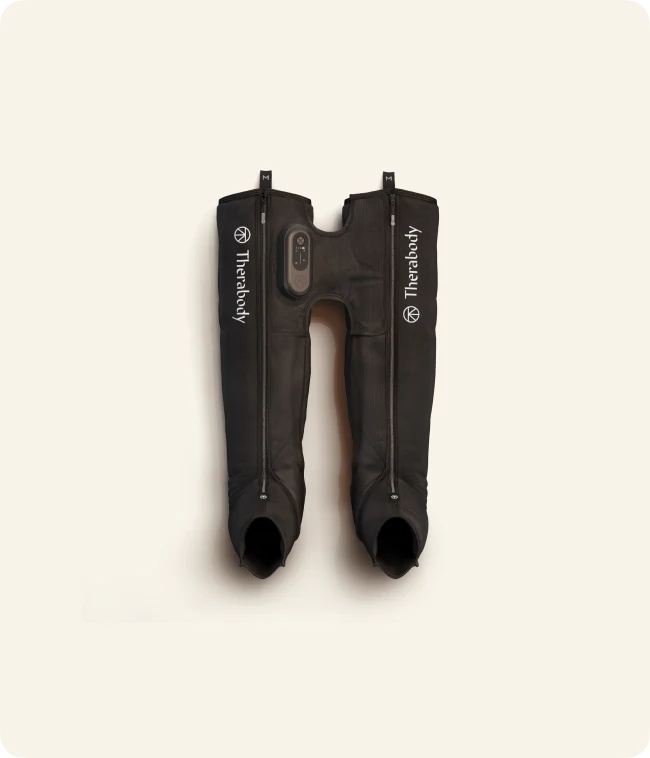



New Study Shows Therabody JetBoots Strengthens Post-Exercise Recovery in African American Female Runners
Publié :
Reviewed by Therabody Scientists: Tim Roberts, MSc; Rachelle Reed, PhD, MS, ACSM-EP
Expert contributor: Jeffrey Otis, PhD, Study Co-Principal Investigator; Jonathan Howard, PhD, Principal Investigator
For runners, training is only one part of the equation. Recovery between runs and over time can influence how you feel, perform, and prepare for your next workout. Finding recovery strategies that are both effective and practical isn’t always easy.
Pneumatic compression has become an increasingly popular recovery tool, using rhythmic pressure through the legs to support circulation and help the body recover after exercise. But does it make a difference for runners?
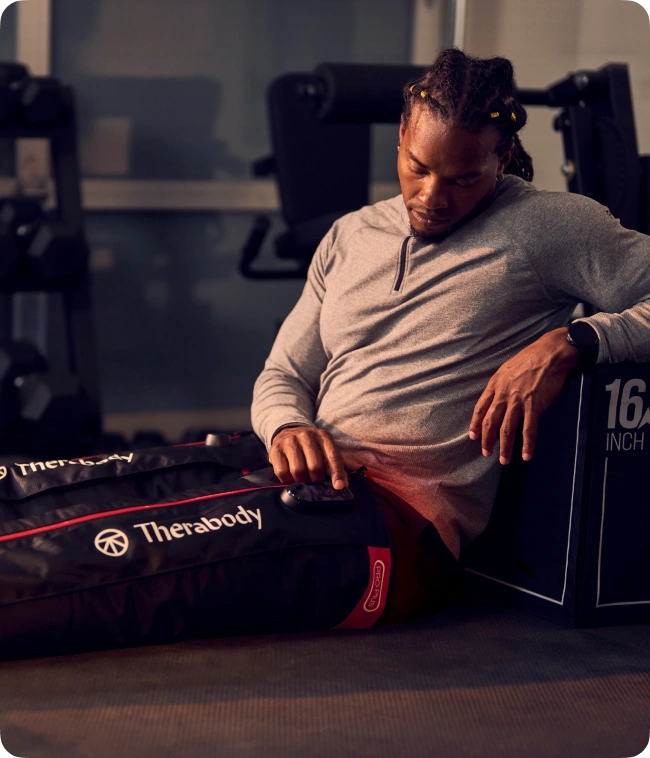
Research suggests that pneumatic compression can help runners recover after hard efforts by improving circulation, reducing soreness, and decreasing fatigue. [1] Devices like Therabody’s JetBoots® use pneumatic compression to support recovery and help athletes feel more prepared for their next training session. [2]
A new study put Therabody® JetBoots Prime to the test, examining how regular use after training affected recovery in African American women runners, a population historically underrepresented in exercise and recovery research. Here’s what researchers found.

First, what is pneumatic compression?
The study’s co-principal investigator, Jeffrey Otis, PhD, describes how pneumatic compression works: “Think of it as a controlled, mechanical squeeze that moves from your feet up toward your torso. That motion mimics what your own muscles do when they contract during exercise, pushing blood and fluid back toward the heart and into circulation.”
Pneumatic compression activates your physiology without requiring any effort from you. Massage is effective but requires a therapist and time. Pneumatic compression sits in a different category: it systematically applies mechanical work to your vascular and lymphatic system while you relax or focus on something else — a distinction from other recovery methods.
What was the goal of the study?
Recovery and exercise research has historically been conducted primarily in male athletes, or at best, mixed-sex samples where women are underrepresented. African American women are almost entirely absent from recovery intervention research, despite being one of the fastest-growing groups in recreational running.
So, the study authors sought to answer: When African American female runners use Therabody JetBoots Prime, do they recover better compared to passive rest?
How the study was conducted
31 participants completed an eight-week study comparing recovery metrics after JetBoots use or passive rest. Each participant spent four weeks using JetBoots for 20 minutes after training and four weeks recovering as usual. Participants received a Garmin Forerunner with individualized, data-driven workout recommendations throughout the eight-week study to mimic real-world training plans.
At the beginning, middle, and end of the study, participants completed a 5K treadmill run followed by recovery with either JetBoots or passive rest. Researchers then measured several aspects of physical recovery, including heart rate, blood flow, flexibility, muscle soreness, pain, and performance, along with participants’ perceptions of their recovery and stress.

What the study found
The study findings suggest that using Therabody JetBoots Prime provides meaningful benefits for cardiovascular recovery, perceived recovery, flexibility, and tibial pain sensitivity. These findings support the device as a practical recovery modality for African American women runners.
JetBoots improved post-exercise heart rate recovery by 8.8%
Twenty minutes after finishing their 5K run, participants' heart rates were measured. JetBoots use was associated with an eight beats per minute (BPM) faster heart rate recovery versus both baseline and control, which was an 8.8% reduction.
This reflects a clinically meaningful cardiovascular recovery when JetBoots are used post-exercise.
Heart rate recovery (HRR) is strongly correlated with autonomic dysfunction, heightened cardiovascular stress, and increased long-term cardiac risk. [3, 4] By accelerating HRR and enhancing venous return, intermittent pneumatic compression may reduce overall cardiac workload following exercise, leading to stronger recovery. [4]
JetBoots helped participants tolerate 19% more pressure on the shins
Participants tolerated about 19% more pressure at the tibialis anterior (a muscle on the shin), during the JetBoots condition compared to control.
The tibia bone is the most common site of running-related bone stress injuries. With every foot strike during distance running, the bone absorbs repetitive mechanical load. Over time, chronic loading elevates local pain sensitivity, making the tissue progressively more reactive to pressure. [5]
Pneumatic compression helps by enhancing the clearance of interstitial fluid, reducing local inflammatory mediators, and stimulating mechanoreceptors in the tissue. [6]
Pneumatic compression may help the shin recover from running-specific stress.
Dr. Jonathan Howard, Principal Investigator, helps to contextualize this finding. “JetBoots appeared to influence how the body perceives localized mechanical stress at the exact site where runners are most vulnerable. This effect showed up specifically in African American women, a group for whom essentially no data like this previously existed. That's what makes it genuinely exciting, and it's the question I most want to see followed up in future research.”
JetBoots enhances perceived recovery quality by 11.5%
Participants were asked how recovered they felt after using JetBoots and after passive rest. JetBoots use enhanced perceived recovery quality by 11.5% compared to baseline and the control condition.
This means participants felt more ready to train following JetBoots use.
JetBoots improved lower extremity flexibility by 10%
Participants completed the sit-and-reach test, a measure of hamstring and lower-back flexibility.
Using the JetBoots was associated with a 10% improvement in lower-extremity flexibility compared to baseline and the control group.
Pneumatic compression enhances blood flow and reduces residual muscle tension following repeated training sessions, which may contribute to the increase in flexibility seen in the study. [6]

Study strengths
The study had several strengths.
The co-principal investigators explained, “We used a randomized crossover design, which means every participant experienced both the JetBoots condition and the control condition. That's methodologically powerful as each woman served as her own control, which eliminates a lot of the noise that comes from individual differences.”
“Every design decision we made was deliberate. The crossover structure was chosen specifically because we knew our sample size would be modest, and we wanted maximum statistical power. By having each participant go through both conditions, we controlled for individual differences in fitness, recovery capacity, and training history — those variables are essentially neutralized when the same person experiences both arms of the study.”
The authors also pointed to the study’s real-world design, not a single session lab test.
“Participants used the device the way a runner would over time. That matters enormously for understanding how these devices work in practice.”
Lastly, they measured multiple forms of recovery: cardiovascular, physical, subjective, and pain, as recovery is multifaceted.
What this research means for female runners
These findings give African American female runners something they've never had before: data on a recovery tool tested specifically for them. Cardiovascular recovery, flexibility, perceived recovery, and pressure tolerance impact how a runner manages training load while staying healthy.
Key takeaways
- Pneumatic compression devices use an air pump to deliver targeted compression to a cuffed area (via a boot or garment) to increase circulation.
- The study filled a major research gap by testing JetBoots in African American women runners over an eight-week real-world protocol.
- Key physiological benefits included an eight BPM lower heart rate 20 minutes after a 5K (8.8% improved heart rate recovery) and ~19% greater pressure tolerance on the shin, a common site of running-related bone stress injuries.
- Participants had greater lower-extremity flexibility, higher perceived recovery quality, and higher tibial pressure pain thresholds during the JetBoots condition, suggesting that intermittent pneumatic compression may enhance several aspects of post-exercise recovery in African American women runners.
- The randomized crossover approach (each participant served as her own control), multi-metric measurements, and real-world use strengthen the findings.

Produits associés
-
 Épuisé En vente
 -
 Épuisé En vente